Text Prompt Cinematography: How a Text to Video App Shapes Style, Motion, and Format
A practical guide to using a text to video app to shape motion, camera style, aspect ratio, and quality settings, with prompt examples and model insights for beginners.

By Movi AI Team
Movi AI Editorial Team
A text to video app does more than turn a sentence into moving images. It helps you shape camera motion, visual style, shot length, and format so your idea becomes something watchable, not just something generated. For beginners, learning how to guide these controls is often the fastest way to get better results.
Why this angle matters for beginners
Many guides explain the big idea behind text-driven generation, but fewer show how a creator can use a text to video app like a lightweight director's toolkit. If your clips look random, overly literal, or inconsistent, the issue is often not the concept. It is the prompt structure, aspect ratio, and model behavior.
- Use clear subjects before style words
- Describe movement separately from appearance
- Choose the right aspect ratio for the platform first
- Keep prompts focused on one scene per shot
- Treat quality settings as tools, not magic fixes
How a text to video app interprets your words
Most systems break your prompt into ideas such as subject, environment, action, camera, and style. The model predicts frames that fit those ideas, then tries to keep motion coherent over time. In simple terms, your text becomes a set of visual instructions, but different models weigh those instructions differently.
Diffusion-based systems
Diffusion-based approaches start from noise and gradually refine frames into a scene that matches your prompt. They are often strong at producing rich visuals and stylized shots, but they may struggle when you ask for long, highly specific action sequences unless your prompt is tightly framed.
Transformer-based systems
Transformer-based approaches are designed to understand relationships between words, frames, and events across time. They can be better at handling story logic and multi-step motion, though results still depend on the underlying training data and system design. This is why one model may excel at realism while another handles action or composition more predictably.
"Better generated video usually starts with better direction, not longer prompts."
Prompt engineering for cleaner motion
When using a text to video app, think like a shot planner. A strong prompt usually includes four parts: who or what is on screen, what happens, how the camera behaves, and what the style should feel like.
A simple prompt formula
- Subject: a baker placing pastries on a wooden counter
- Action: steam rises as fresh bread is sliced
- Camera: slow push-in, shallow depth of field
- Style: natural morning light, realistic food commercial
Bad prompt vs good prompt
- Bad: make a cool bakery video
- Why it fails: too vague, no action, no camera language, no style anchor
- Good: a baker slices warm sourdough on a wooden counter, steam visible, close-up shot, slow push-in camera, natural window light, realistic food ad, 6 seconds, vertical format
If you want to convert text to video more reliably, reduce ambiguity. Replace abstract words like "awesome" or "viral" with observable details such as close-up, handheld camera, city street at night, or soft cinematic lighting.
Settings that change output more than most people expect
Aspect ratio
Set the aspect ratio based on where the clip will live. Use 9:16 for Reels, Shorts, and TikTok. Use 16:9 for YouTube and presentations. Use 1:1 for many feed placements. Choosing this early helps the model compose the scene correctly instead of awkwardly cropping key action later.
Video length
Shorter clips often look cleaner. For beginners, 4 to 8 seconds is a smart range. Longer generations increase the chance of drift, odd motion, or changing subjects. Instead of forcing one long scene, generate several short shots and sequence them together.
Style keywords and quality settings
Use style terms carefully. Combine a genre cue with a texture cue and a camera cue. Example: documentary, natural light, slow pan. Higher quality settings can improve detail, but they cannot fix a weak prompt. Start with a clear idea, then refine.
Try prompt-first video creation with Movi AI
*Movi AI* is a user-friendly **text to video app** for iOS and Android. Create clips from prompts, images, speech, or existing footage, then test different styles and formats faster.
Download Movi AIPractical uses for text-led video creation
- Social content: turn a hook or caption idea into a short visual scene
- Product marketing: generate feature teasers before a full shoot exists
- Education: visualize concepts, processes, or step-by-step lessons
- Moodboarding: test creative directions before investing in production
- Small business promotion: make quick announcements, launches, and seasonal clips
This is where a modern text to video app becomes useful beyond experimentation. It supports fast ideation, quick revisions, and platform-ready formatting without requiring a full studio workflow.
A beginner workflow you can use today
- Write one single-scene prompt with a visible action
- Pick your aspect ratio before generating
- Choose a short duration first
- Add only 2 to 4 style descriptors
- Generate, review, then revise one variable at a time
- Save the winning prompt and create matching follow-up shots
If you have been searching for a text to video free option or a beginner-friendly mobile workflow, the key lesson is the same: better direction produces better clips. The app matters, but your prompt structure matters more.
Frequently Asked Questions
What is the best text to video app for beginners?
The best choice is one that makes prompting, aspect ratios, and revisions simple. *Movi AI* is beginner-friendly because it supports prompt-based creation with an easy mobile workflow.
How do I convert text to video with better quality?
Use a specific prompt with a clear subject, action, camera direction, and style. Keep clips short, pick the right aspect ratio, and refine one setting at a time.
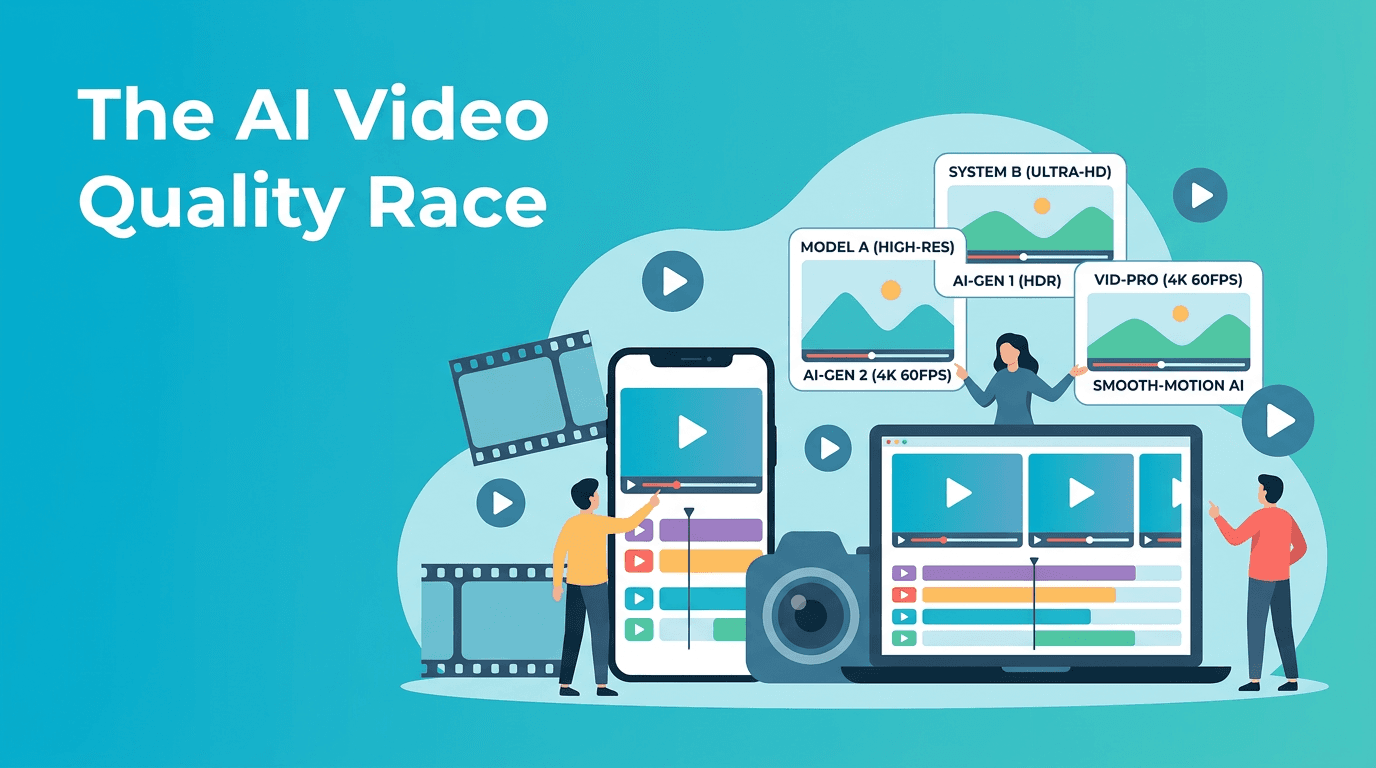
How do different models handle text prompts?
Some models are stronger at visual texture and style, while others handle motion and scene logic more consistently. The same prompt can look different across systems because each model interprets language and timing differently.
Can I make social media clips from only a text prompt?
Yes. Short prompt-based clips work well for Reels, Shorts, TikTok posts, teasers, and concept tests. Vertical format and simple one-scene prompts usually perform best.
Movi AICreate stunning AI videos in seconds!
Turn your ideas into professional videos with the #1 AI video maker.
Download Movi AI